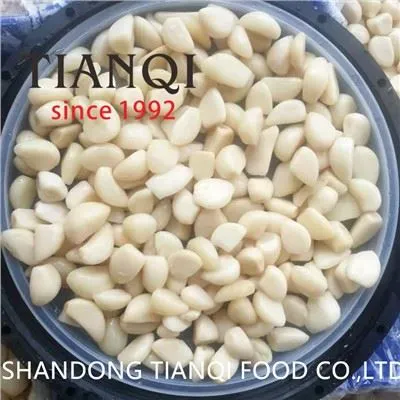

Preservation principle and application of salt water pickled garlic
Mar 16, 2025
Preservation principle
High osmotic pressure environment: Saltwater pickling forms a high osmotic pressure environment through a high concentration of salt solution, which inhibits the growth and reproduction of microorganisms. Microorganisms will lose water under high osmotic pressure, resulting in cell wall separation and loss of activity.
Reduce water activity (Aw): The addition of salt reduces water activity, reduces the free water available to microorganisms, and inhibits the growth of bacteria, mold, and yeast.
Inhibit enzyme activity: Salt can inhibit the activity of certain enzymes in garlic and delay the browning and corruption process of garlic.
Antioxidant effect: Salt pickling can slow down the oxidation reaction of garlic to a certain extent, maintaining its color and flavor.
Application
Food processing industry: Saltwater pickled garlic is widely used in food processing as a condiment or ingredient for sauces, canned foods, ready-to-eat foods, etc.
Catering industry: Pickled garlic can be used directly in cooking to enhance the flavor of dishes and extend the shelf life of ingredients.
Home storage: Salt pickling is a simple and effective home storage method that helps consumers preserve garlic for a long time and use it at any time.
Export trade: Salt pickled garlic is suitable for long-distance transportation and export due to its long shelf life, meeting the needs of the international market.
Healthy food: Pickled garlic retains some of the nutrients of garlic (such as allicin) and is used as a functional food or health supplement.


Advantages
Extend shelf life and reduce food waste.
Maintain the flavor and texture of garlic while increasing the salty and fresh taste.
Simple operation, low cost, suitable for large-scale production and home use.
Precautions
The salt concentration needs to be moderate. Too high will affect the taste, and too low will not effectively inhibit microorganisms.
Pay attention to hygiene during the pickling process to avoid cross-contamination.
The storage environment should be kept cool and dry, avoiding direct sunlight.