
Oyster vs. Button Mushrooms in Brine: Processing Applications
Jun 10, 2026
Oyster vs. Button Mushrooms in Brine: Processing Applications
Preserved industrial mushrooms serve as foundational ingredients across global food manufacturing, dictating the structural integrity, yield efficiency, and flavor profiles of canned goods, ready meals, and food service products. Choosing between oyster mushrooms (Pleurotus ostreatus) and button mushrooms in brine (Agaricus bisporus) requires a strict evaluation of physical characteristics, thermal stability during retort processing, and commercial drained weight efficiency.
1. Texture Differences and Thermal Stability
The structural performance of a mushroom during industrial thermal processing (retorting at 121℃ under pressure) is determined by its cellular matrix.
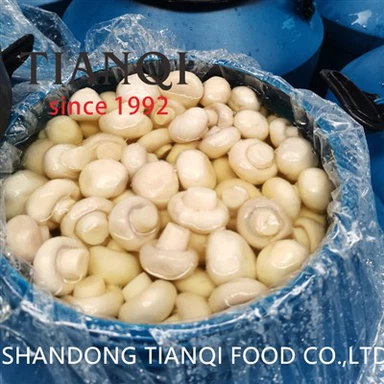
Button Mushrooms (Agaricus bisporus): Characterized by a dense, compact pileus (cap) and a rigid stipe (stem). The cellular walls are rich in chitin, which provides excellent resilience during high-temperature sterilization. In industrial applications, button mushroom in brine maintains a firm, crisp texture with minimal shrinkage, making it the industry standard for automated slicing, dicing, and high-speed canning lines.
Oyster Mushrooms (Pleurotus ostreatus): Possess a delicate, fan-shaped structure with thin flesh and extended gills. While offering a tender texture preferred in specific culinary applications, the delicate pileus is highly susceptible to structural degradation, tearing, and high water loss during continuous mechanical agitation and retort processing.
2. Canned Food Application Suitability
Choosing the correct mushroom variety directly impacts production line efficiency, equipment downtime, and final product shelf life.
Button Mushrooms in Brine Applications
Commercial Canning & Retort Pouches: Due to uniform sizing (ranging from 15mm to 40mm whole grades), button mushrooms ensure consistent heat penetration patterns during sterilization. They prevent under-processing risks in large-scale food manufacturing.
Industrial Pizza Toppings & Ready Meals: High mechanical shear resistance allows button mushrooms to pass through industrial dicers and slicers without tearing, maintaining precise visual presentation.
Sauces and Dressings: The neutral flavor profile and stable pH matching of brined button mushrooms prevent unexpected alterations in the acidity profiles of tomato- or cream-based formulations.
Oyster Mushrooms in Brine Applications
Premium Retort Soups & Stir-Fry Mixes: Primarily restricted to niche culinary products where hand-packing or low-shear filling systems are utilized.
Plant-Based Meat Analogs: The fibrous, strip-like texture of torn oyster mushroom caps serves as a functional texturizer in specific vegan formulations, though it requires specialized handling to prevent over-softening.